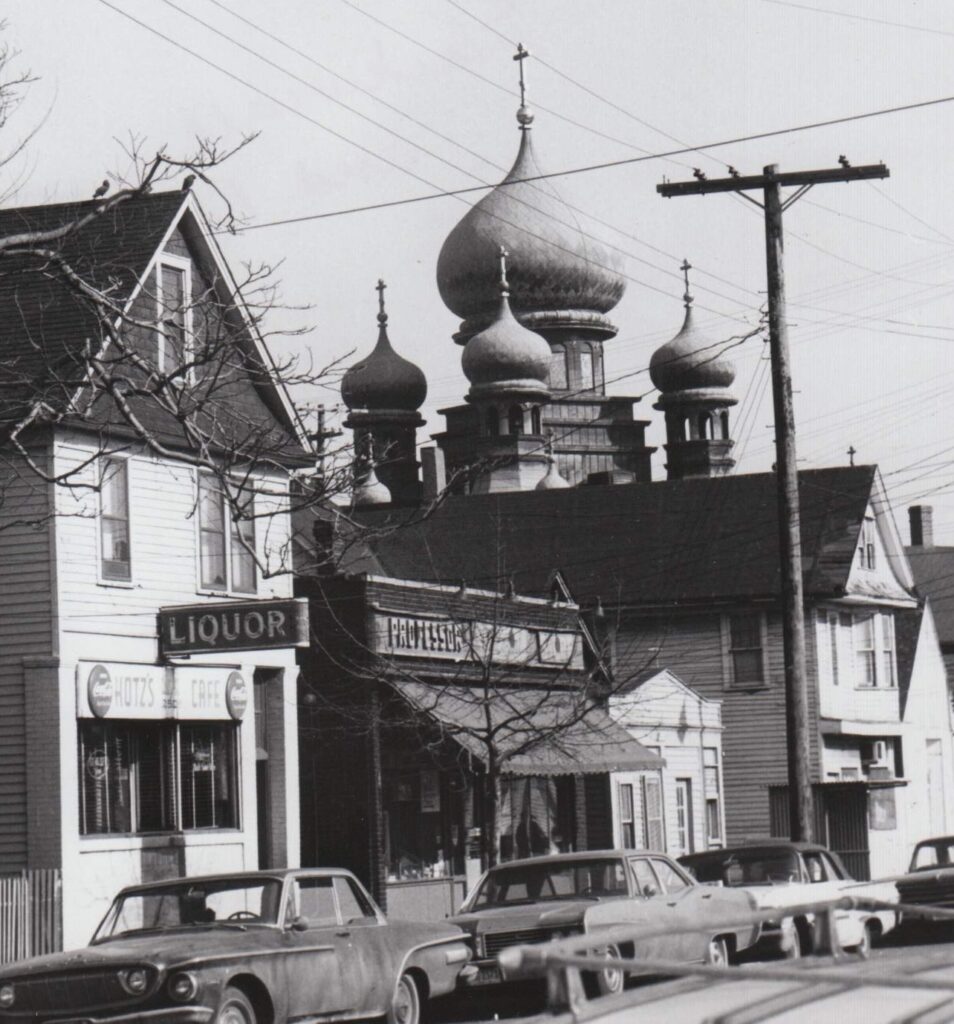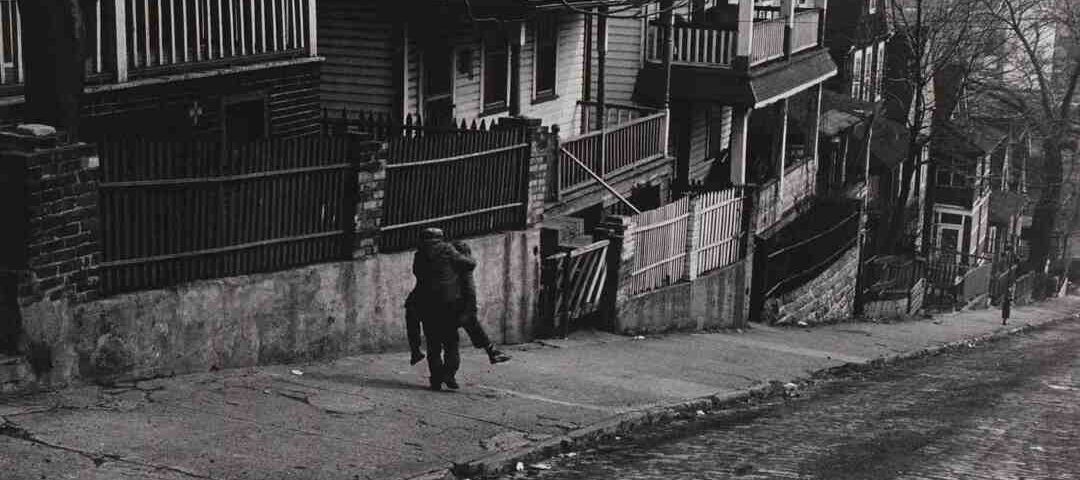
The Center has just completed an initiative to recover, reassemble, and enhance access to a collection of 73 oral history interviews about Cleveland’s Tremont neighborhood. This extraordinary resource is now available to explore on Cleveland Voices, the Center’s discovery site for the Cleveland Regional Oral History Collection.
In 2002-2003, Cleveland State students mentored by Professors Tom Humphrey, Mark Tebeau, and Dan Ashyk set out with tape recorders and lists of questions in an effort to understand the experiences of longtime residents of Tremont, a multiethnic neighborhood historically known as the South Side before the early waves of gentrification in the 1980s-90s.
The interviews, collected in a collaboration between CSU and several Tremont organizations, were originally made publicly available online in the form of transcripts (which students prepared the old-fashioned painstaking way), but the project web page eventually went offline and the original tapes lay buried in a filing cabinet for more than two decades. Soon after the Tremont project, the Center began using digital recorders and has since collected more than 1,250 additional interviews that are archived through CSU’s institutional repository and featured on Cleveland Voices.
The students who took part in the Tremont project learned about ethnic traditions, industrial labor, leisure and recreation, experiences in schools and churches, neighborhood businesses, the hardships of the Great Depression, and much more. Participants remembered in rich detail attending school at places such as Lincoln High and St. John Cantius. They recalled meeting dates at the Garden Show and Jennings Theatre, Ukrainian and Polish holiday food traditions at home, programs to counter juvenile delinquency at the Merrick House settlement, the arrival of Puerto Rican and Appalachian migrant families, the damage wrought by the building of the freeways that sliced Tremont into four disconnected parts, air pollution from the adjacent industrial Flats, and conflicted feelings about the effects of gentrification.
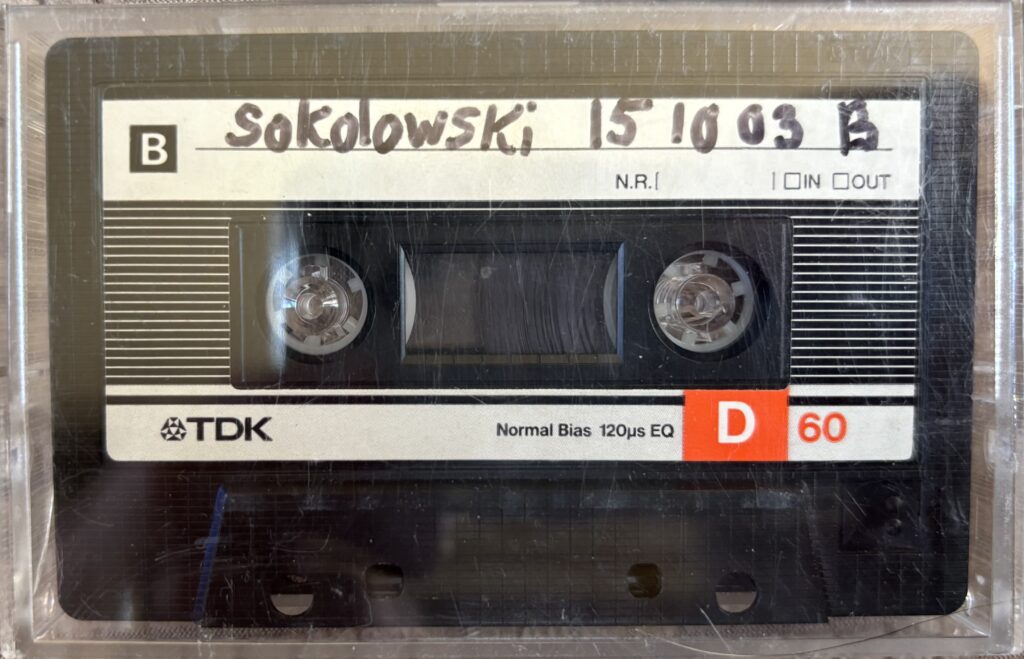
Several months ago, one of the alumni who had been one of the Tremont project interviewers wrote to us to ask if we had the interviews. After initially failing to locate any materials relating to the project, we remembered the Internet Archive and from there were able to obtain 51 of 73 interview transcripts. Soon after, we found tapes and release forms for 63 of the interviews. We decided as a first step that we would accession the interview transcripts with appropriate descriptive abstracts into Cleveland Voices. Once those were added, we explored options for digitizing the tapes. Although we considered working with Center graduate assistants to do the work in-house, we also priced professional digitization and determined that doing so was within reach.
Thanks to support from the College of Arts and Sciences Office of the Dean and the Department of History, we were able to send the tapes to Preservation Technologies, a firm based near Pittsburgh that had digitized other materials for the CSU Special Collections at Michael Schwartz Library. A few weeks later we received MP3 and WAV audio files for each side of every tape. After combining the files into single interview files, we used DialogueEnhance, an automatic speech processing tool that combines AI and signal processing methods to “repair” audio marred by extremely low output levels or intrusive background noise. Then we used Alice, an AI-based audio transcription provider, to generate rough transcripts that we then authenticated, a much harder than usual task because the audio quality of the source tapes was widely varying. Even with AI enhancement, a few tapes with the poorest audio made transcription difficult. Unlike the 98% accuracy of the average AI-generated transcript, these transcripts required significant remedial work as they were only around 70-75% complete.
To do this work right entailed a lot of time, thought, and technological supports that simply weren’t available even a few years ago. It was satisfying to be able to revisit the Tremont project and to work through the inherent challenges to bring this collection as much as possible into accord with oral history archival best practices. We are pleased to report that this work is now complete and invite you to explore the collection.